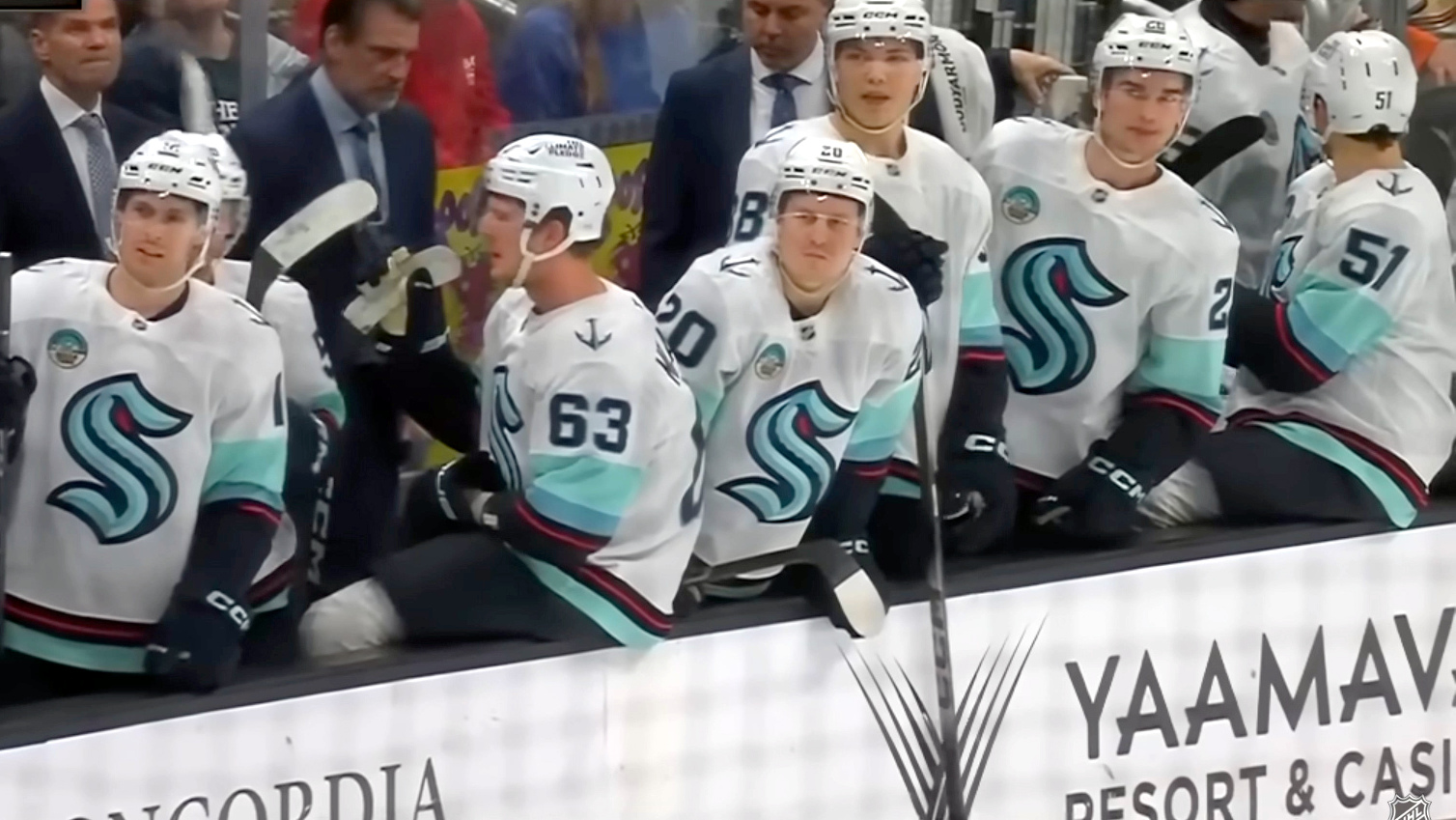

In our last story, we outlined reasons for optimism about the Seattle Kraken heading into next season. Today, the more tarnished side of the coin.
The much-anticipated, soon-to-be-released Kraken audit will contain one glaring weakness.
This isn’t to say a top-to-bottom review, especially for a franchise which has missed its playoff goal for three years running, won’t be welcome. Clarifying organizational direction, improving internal communication, restructuring reporting structures, can only be good things.
But – and this isn’t the audit’s fault – an organizational review can’t score 35 goals. An org review can’t play shutdown defense. And an org review almost certainly can’t acquire those types of players for the 2026-27 Kraken season.
That’s because the opportunities to do that are far harder this offseason than they would have been last year, or the years before that. Coming out of the pandemic, flat revenues meant the NHL salary cap, the maximum teams could spend on players, barely changed.
- 2019-20 through 2021-22: $81.5 million
- 2022-23: $82.5 million
- 2023-24: $83.5 million
- 2024-25: $88.0 million
Flat Cap Created Kraken Opportunities
The upshot was that teams which offered large contracts in the pre-pandemic belief that the salary cap would continually rise were now in a bind. Clubs were desperate to offload high-priced players, not because they weren’t wanted, but because an unyielding, immovable cap forced strict payroll ceilings. Clubs without money to spend also swallowed hard and let good players on expiring contracts enter free agency.
This was the best opportunity for teams like the Kraken with cap space to (1) offer prospects and picks for proven talent, and (2) sign other proven talent as free agents.
Even when Seattle made the attempt, the results were mixed. Remember when Seattle traded picks to acquire a forward teammates loved, opponents hated, who scored 20 goals in back-to-back seasons? The Dallas Stars didn’t want to part with Mason Marchment in 2025, they just didn’t have the room to keep him.
We know how that turned out; after 29 games, Marchment was jettisoned to the Columbus Blue Jackets.
Many believe the 2024 free agent signing of center Chandler Stephenson to a 7-year, $43.75 million deal was another big swing making little contact.
Cap-Created Windows Now Closing
Had the Kraken chosen the wrong players, not targeted enough players, or all of the above? That, an audit can address. Whatever the findings, though, it’s highly unlikely the Kraken will have the opportunity to do better this summer.
Again, the salary cap is the culprit. Lucrative new media rights deals have once again sent the cap in an upward trajectory.
- 2025-26: $95.5 million
- 2026-27: $104.0 million
- 2027-28: $113.5 million (estimate)
The higher limits have allowed teams to re-sign players before they hit the open market, and keep the ones they’ve already signed. No matter how bold the audit says the Kraken should be, their ability to exercise that boldness through trades and free agency this offseason will be severely tested.
A Media Skeptic Of Kraken ‘Vision’
Tyler Yaremchuk of the Daily Faceoff podcast still finds a chasm between what the Kraken should do and what they will do.
“They’re going to spend money in free agency, they’re going to try a Hail Mary trade for Robert Thomas or whatever, and it’s probably not going to work, and then next year they’re going to finish 10th or 11th in the Western Conference again. They lack direction, and I think they lack the proper vision to properly build a hockey club.”
In fairness to Kraken ownership and management, that’s what the audit is supposed to address.
Yaremchuk continued, “The right way would be sell off veterans, collect assets, pray for lottery luck, and try to land a few legit franchise-changing pieces in the draft. Instead, it sounds like the Kraken are going to continue to chase their tail. Sure, they have a bunch of good players. They don’t have any great players, though.”
(Editor’s Note: The Kraken’s trade deadline ‘strategy’ of holding on to four unrestricted free agent veterans, rather than trade them for draft assets, will only add to the aforementioned scenario. An extra low 1st-rounder, a 2nd or 3rd rounder or two, would have come in handy. Instead, Jamie Oleksiak, Elie Tolvanen and Jaden Schwartz will likely walk for nothing. Re-signing Schwartz would only perpetuate the mistake. The club already re-signed its captain Jordan Eberle, who would have commanded the greatest return.
That all relates to longer term. In the meantime, for 2026-’27, this club is stuck in the murky middle.)
Earlier Kraken:
— Kraken Draft Target Is A Top-2 Prospect Defenseman


The Kraken management are idiots. There is no way around it. All of their UFAs should have been sold off. They should also have traded Grubauer at a high point to one of the many teams who needed better goaltending in the playoffs. Instead, Botterill, who does not seem to understand his own roster, kept them for the pipe dream of making the playoffs. Why is this guy still employed?
The other error in not trading UFAs is that the team would have finished lower in the standings, at least fifth from bottom and could be looking at the number one pick right now. Stupid, stupid, stupid. Year after year.
In more moderate terminology, previous articles and the current one posted on the site concur with you.