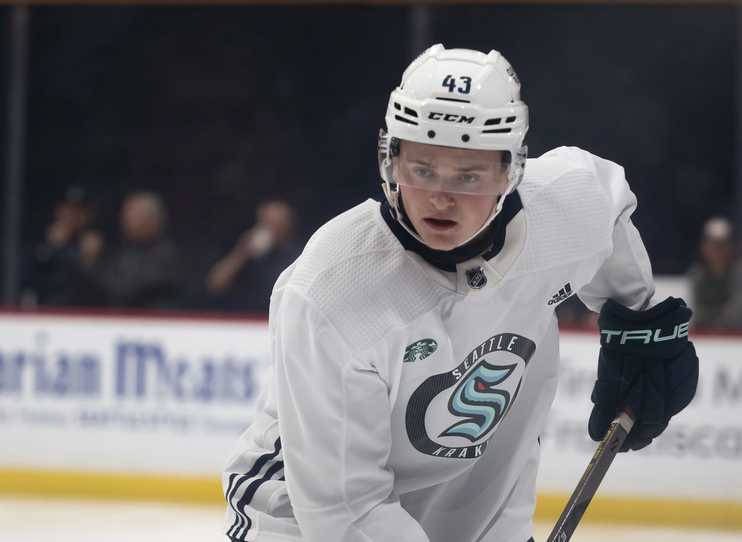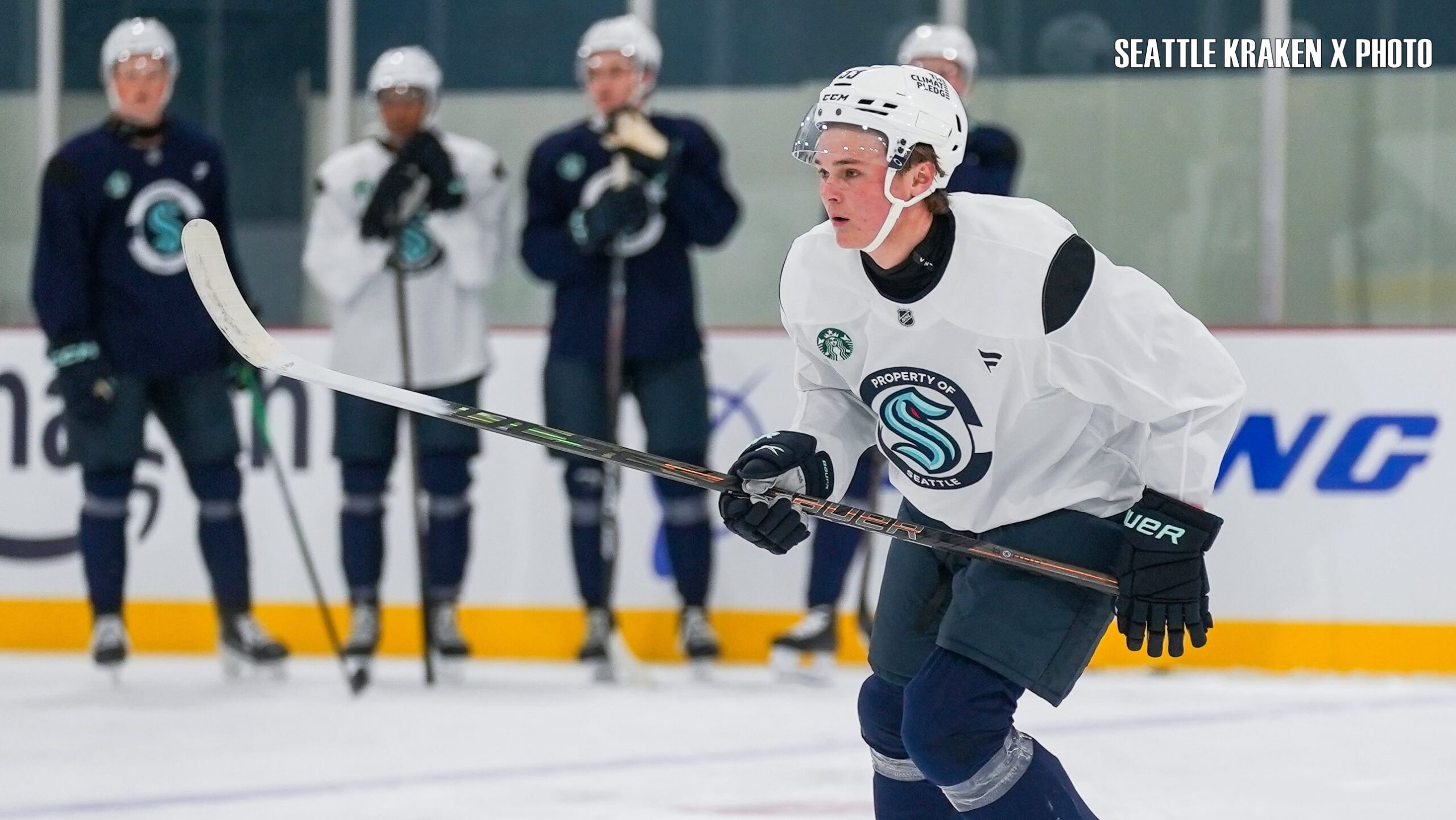

Given the big-name players recently declining lucrative Seattle Kraken offers, development camp has taken on a much greater reciprocal value. Not only are prospects selling themselves this week at Kraken Community Iceplex; the franchise is selling itself and the city to the prospects.
“That’s a big part of our development camp,” Kraken general manager Jason Botterill pointed out. “There’s an on-ice element to it, that you’re trying to help the kids. More importantly, that our prospects get familiar being in this building, being in Seattle, being in the Pacific Northwest.
“When they come to Seattle, not just seeing the hockey rink. We took them all out to Ballard for dinner. They’re all going to U-Dub to be around their facilities.”
Kraken Hoping First Impression Is A Lasting Impression
In other words, a successful sales job to a youngster can make the difference when it comes time to sign those second and third contracts in future years. If the Kraken can do that, they won’t have to rely as heavily on wooing reluctant stars from other franchises.
Look how well it worked on Bobby McMann. The winger didn’t have a say in getting dealt to the Kraken from Toronto at the March trade deadline. But he liked the organizational welcome, the coaches, his new teammates, the facilities. An increased role leading to 10 goals in 18 games didn’t hurt his perception of the club, either.
Teams would have been lining up with offers had McMann waited for free agency. The 30-year-old forward didn’t, signing a six year, $34.5 million contract on June 21.
The clincher for McMann, says Botterill, was experiencing more Seattle than the one dreary day a visiting player normally gets during the middle of winter.
“He was able to enjoy the Pacific Northwest after the season. Golf, South Lake Union, going around different parts of the city. That’s a big part of making sure that message gets out to other people in the National Hockey League.”
Kraken Turning To ’23-And-Under Group’
In recent years, teams cramped against a tight cap ceiling were forced to let star players on expiring contracts walk away. Not this summer, with the cap expanding by $8.5 million to a record $104 million.
As a result, many prominent players who would have been star attractions of the 2026 free agent class never got that far. “With the escalating (salary) cap,” Botterill explained, “more teams have an opportunity to sign their own players.”
Left with underwhelming FA options, Botterill decided against pulling the trigger on a high-dollar signing. “It was never going to be a focus on day one of free agency.”
The GM was also wary of signing a veteran who might “stunt the growth” of younger players by taking their ice time. “This is our new landscape, the importance of internal development.”
In fact, Botterill used an interesting expression when talking about the three year, $11.5 million contract finalized with new trade arrival Mackie Samoskevich.
“That speed, shot-first mentality, fits in with our 23-and-under group really well. With the extra ice time he can get with our group, we think his numbers are going to really take off.” At 23 years old himself, Samoskevich is a member in good standing.
A greater reliance on the “23-and-under group” this coming season doesn’t mean the front office is taking the rest of the summer off. “Trades are where you’re going to improve your team. We’ll keep looking at different opportunities.”
Earlier Kraken:
— Strike! Kraken Prospect Aces Mariners Debut